

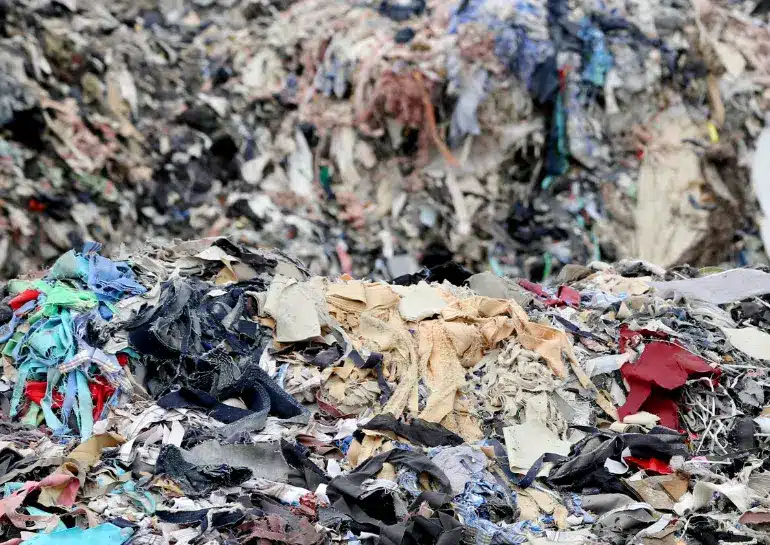
The so-called Waste Framework Directive has formed the central legal framework of EU waste policy for many years. With its revision, the textile and footwear sector in particular is coming into focus, as significant environmental impacts arise here — especially due to fast fashion and related developments.
The objective of the Waste Framework Directive remains unchanged in 2026: to further reduce waste volumes in a targeted manner, use resources more efficiently, and consistently strengthen the circular economy. For modern companies, retailers, and other stakeholders within established supply chains, this results in new obligations, but also clear guidance for sustainable action.
We provide you with a structured overview of the Waste Framework Directive regulations that were already initiated in 2025 and are set to be implemented in a more targeted manner in the future.
What does the Waste Framework Directive mean for the textile sector?
The Waste Framework Directive establishes fundamental principles of European waste policy for packaging and other product categories. These principles include waste prevention, reuse, and recycling. While important sectors have already been clearly regulated through the Packaging Act and the Battery Act, the textile sector has so far received comparatively little regulatory attention. In light of recent data and environmental indicators, this is now changing.
The European textile and clothing sector is economically significant while also posing major environmental challenges. It generates annual revenues of approximately 170 billion euros and employs more than one million people across thousands of companies. At the same time, particularly in the fast-fashion segment, the sector contributes substantially to environmental pressures, including:
- High water and land consumption
- Extensive use of raw materials across the supply chain
- Contribution to greenhouse gas emissions
- Large volumes of difficult-to-recycle textile waste
The Waste Framework Directive addresses these challenges by establishing a binding regulatory framework that places clear responsibility on manufacturers and retailers.
The revised Waste Framework Directive and its objectives
With the revision of the Waste Framework Directive, the EU is responding to the rapidly increasing volume of textile waste across Europe. Textile waste is now considered one of the most pressing waste streams, as many garments are purchased at low cost, used briefly, and then disposed of prematurely. The key objectives of the reform therefore include:
- Strengthening reuse and recycling
- Defining clear responsibilities for manufacturers and distributors
- Establishing harmonised rules across all EU Member States
- Preventing textile waste at the product design stage
Alongside obligations such as the monitoring duties for online marketplaces and the reporting requirements for packaging in e-commerce, the Waste Framework Directive has become a key instrument for environmental protection in the EU.
The Waste Framework Directive and EPR for textiles
A core component of the Waste Framework Directive is the introduction of mandatory extended producer responsibility systems (Extended Producer Responsibility, or EPR for textiles) covering textiles and footwear.
Under these rules, manufacturers and importers must pay a fee for each product they place on the market. These fees are used to finance the collection, sorting, and treatment of textile waste and to harmonise waste management systems across Europe.
EPR systems under the Waste Framework Directive include, among other measures:
- Financing collection systems for textiles and footwear
- Organising sorting and further treatment processes
- Promoting reuse and preparation for reuse
- Ensuring recycling or compliant disposal
Comparable EPR structures already exist for other product groups. For example, EPR also applies to mattresses, and established systems are in place for end-of-life tyre management.
What is meant by eco-modulation under the Waste Framework Directive?
One of the most effective instruments introduced by the Waste Framework Directive is eco-modulation of EPR fees. Under this approach, fee levels are linked to sustainability criteria such as product durability, reparability, and recyclability.
These criteria are aligned with EU ecodesign legislation and directly connect sustainable product design with economic incentives.
For companies, this means:
- More sustainable products result in lower EPR fees
- Short-lived or poorly recyclable textiles incur higher costs
- Investments in design quality and material selection deliver long-term value
These principles also apply to other product groups such as packaging and electronic equipment. Revenue generated through eco-modulated fees is intended to support research and consumer awareness initiatives in the future.
What changes will the Waste Framework Directive introduce in 2025 and 2026?
The years 2025 and 2026 are decisive for the Waste Framework Directive, as they mark the transition from policy development to full implementation and enforcement. In the textile sector, this includes a clear legal distinction between used textiles and waste.
Member States are required to ensure that collected textiles are sorted prior to any export. This prevents unsorted waste from being incorrectly declared as reusable goods. Where no sorting takes place, the regulations governing waste shipments apply.
This clarification strengthens environmental and health protection and improves transparency within international textile trade.
Timeline: Waste Framework Directive 2025 and 2026
The implementation timeline is particularly relevant for affected companies. In 2025, the Waste Framework Directive required the establishment of robust EPR systems for textiles and footwear that are intended for long-term operation.
By 2026, the new requirements are expected to apply in full and to be subject to increased enforcement. The focus will be on implementation, compliance monitoring, and further system development. The legal basis remains Directive 2008/98/EC. Manufacturers, retailers, and distributors should ensure that relevant data is collected and reported in good time in order to avoid sales bans resulting from EPR non-compliance.
Impact of the Waste Framework Directive on businesses
The Waste Framework Directive introduces new organisational and financial requirements for businesses. At the same time, it creates harmonised competitive conditions across the EU and increases regulatory certainty. Manufacturers, importers, and brands must engage more closely with product design, material selection, and waste flows.
By preparing at an early stage and monitoring regulatory developments, businesses can ensure long-term compliance and operational security. We are happy to support you with expert guidance and practical solutions — enabling you to manage the Waste Framework Directive with confidence.
FAQ: Waste Framework Directive
What objectives does the revised Waste Framework Directive pursue?
The revised Waste Framework Directive aims to effectively reduce increasing waste volumes, particularly in the textile sector. It promotes durable, repairable, and recyclable products while clearly defining responsibilities for manufacturers and distributors. Harmonised EU rules are intended to ensure fair and transparent competition.
What changes with the Waste Framework Directive 2026?
From 2026 onwards, the new Waste Framework Directive requirements will apply in full and be more strictly enforced. Member States will focus on monitoring and compliance. Businesses must ensure their internal processes are aligned. Non-compliance may result in penalties or sales bans.
What does the EPR obligation mean under the Waste Framework Directive?
Under the Waste Framework Directive, manufacturers are subject to extended producer responsibility for textiles and footwear. They must finance the collection, sorting, and disposal of waste. The aim is a fair allocation of costs based on the polluter-pays principle while encouraging sustainable product design.
What is eco-modulation under the Waste Framework Directive?
Eco-modulation refers to the adjustment of EPR fees based on environmental performance criteria. Products with higher durability and recyclability benefit from lower fees, while less sustainable textiles incur higher charges. This creates targeted economic incentives for sustainable product development.
Why is the Waste Framework Directive important for the circular economy?
The Waste Framework Directive establishes binding conditions for a functioning circular economy. It shifts the focus from waste disposal towards prevention and reuse. This is particularly important in the textile sector, where resource efficiency is critical. Sustainability becomes an integral part of corporate responsibility.