

The EU aims to make sustainable products the standard – and this is precisely where ESPR prioritization becomes essential. The EU Ecodesign for Sustainable Products Regulation (ESPR) establishes a framework that will, in the future, apply to nearly all physical goods.
To ensure that you and your company can respond in good time while safeguarding your position, it is essential to be fully informed. We explain ESPR prioritization and the relevant product groups for you. This way, you stay on the safe side.
What is meant by ESPR prioritization?
The ESPR (Ecodesign for Sustainable Products Regulation) pursues a clear objective: products should become more sustainable overall. This concerns the entire life cycle – from production to disposal. Key factors in this context include:
- Energy consumption
- Recyclability
- CO₂ emissions
- Material use
- Environmental impacts
Of course, all these aspects cannot be addressed simultaneously for every product and item. For this reason, the EU has decided on ESPR prioritization for packaging and other sectors – the so-called product groups.
ESPR prioritization therefore plays a central role in determining which industries must take early action. As a result, successful ESPR implementation becomes a strategic issue, since failure to comply with regulations and provide required data can quickly lead to an EPR sales ban.
Your roadmap under ESPR: How the EU structures the entry into regulation
The ESPR work plan is the instrument used to organize implementation. It prioritizes not only product groups but also the various requirements imposed on them. The aim is to achieve impact without overburdening the market. Sustainable products are to be brought into circulation that already comply with the Battery Act and the Packaging Act, without overwhelming market participants.
At the same time, ESPR prioritization is not intended to create disproportionate burdens – neither for the competitiveness of the companies involved nor through unnecessary bureaucracy. In practice, ESPR prioritization leads at an early stage to reporting obligations, technical requirements, and new verification structures.
This means a tight schedule, particularly for manufacturers, importers, and brands. However, monitoring obligations for online marketplaces and similar platforms are also being significantly expanded. All these developments aim to ensure reliable data collection and transparency in the interest of sustainability.
What are the ESPR product groups?
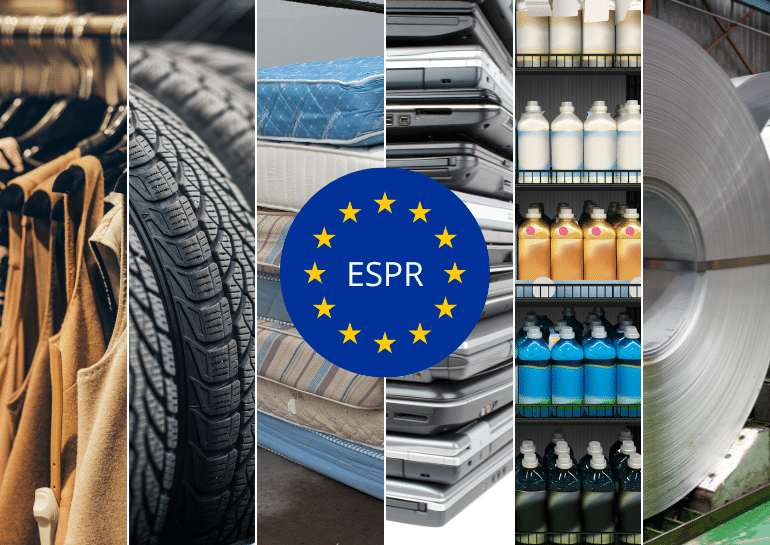
The EU has already clearly identified which product groups are to be prioritized under ESPR. These are sectors that either have particularly significant environmental impacts or offer high potential for savings. These include:
- Iron and steel
- Aluminum
- Textiles (especially clothing and footwear)
- Furniture (including mattresses)
- Tyres
- Detergents
- Paints and coatings
- Lubricants
- Chemicals
- Energy-related products
- Information and communication technology products and other electronic devices
ESPR prioritization therefore affects not only traditional industrial products but also consumer goods and everyday products. EPR for textiles and end-of-life tyre disposal also play a decisive role here.
According to which criteria are the product groups defined?
ESPR prioritization and its product groups are not random but the result of a strategic selection process. Put simply, the EU assesses where new ecodesign requirements can achieve the most sustainable impact. Several perspectives come together here – including environmental impact, market volume, savings potential, and feasibility for companies.
ESPR prioritization also takes into account how well requirements can be standardized. Products with comparable material structures, clear supply chain patterns, or high market penetration can often be regulated more quickly, as data is already well prepared and transparently available.
It is important not to forget that transparency remains a key factor – especially when it comes to hazardous substances. ESPR prioritization therefore establishes entirely new standards for product data, also involving technical systems and suppliers.
Companies should therefore assess:
- Which data is already available in a structured form – and which is not?
- How well are substance information and material compositions documented?
- Can suppliers provide reliable data?
- Which systems are required to make product-related information available?
ESPR 2025 & ESPR 2026: What companies should expect in terms of timing
Many companies are asking when exactly they will need to take action. The direction is clear – better too early than too late. Although a phased implementation of obligations by product group is planned, the overall direction is evident. Companies operating in prioritized sectors will be affected sooner rather than later.
ESPR prioritization for 2025 is widely understood as the phase in which work plans, delegated acts, and specific requirements become more tangible. By 2026, many companies will face concrete implementation obligations for various product groups – for example through binding information requirements or requirements regarding reparability, recyclability, or substance transparency.
Do not forget that ESPR prioritization already serves as a strategic compass today. Those who know the priorities can develop roadmaps, define internal responsibilities, and close data gaps. Therefore, invest early in safeguarding your compliance and confidently manage reporting obligations for packaging in online trade.
Mastering ESPR prioritization effectively
At first glance, ESPR prioritization may seem like an abstract EU process – but it quickly becomes operational. As soon as product groups are specified, companies need reliable product information. This information must not only be standardized but also verifiable.
A sensible starting point is to systematically map your product portfolio against the prioritized areas. In this context, you should also note that under ESPR prioritization, brands, retailers, and importers are integrated into the process and must assume responsibility.
A helpful approach consists of three steps:
- Clarify relevance: Which products fall into prioritized groups?
- Review data status: Which information is missing, and which systems are required?
- Integrate the supply chain: Can partners reliably provide substance and material data?
If you implement these steps early, you gain time – and that is precisely the advantage ESPR prioritization offers. We are happy to support you in implementation and risk minimization as a competent partner. Together with us and tools such as the LUCID packaging register, develop robust product strategies for your company!
FAQ: ESPR Prioritization
What does ESPR prioritization specifically mean for companies?
ESPR prioritization determines which product groups will be subject to the new requirements first. Companies must prepare early for information, documentation, and verification obligations. The goal is to establish sustainable products on the market more quickly. For companies, this provides clear temporal and strategic orientation.
What role does the ESPR work plan play in prioritization?
The ESPR work plan defines which product groups will be regulated and in what order. It serves as a roadmap for companies to better anticipate upcoming obligations. It also prepares specific requirements and timelines. For companies, the work plan is an important strategic planning tool.
What does ESPR prioritization mean for manufacturers and importers?
As part of ESPR prioritization, manufacturers and importers must provide extensive product information. This includes details on materials, substances, and sustainability aspects. This data must be traceable and verifiable. Missing information can lead to market restrictions in the long term.
How does ESPR prioritization affect your supply chain?
ESPR prioritization requires a transparent and reliable supply chain. Companies must ensure that relevant data from upstream suppliers is available. Information on critical substances, in particular, becomes increasingly important. This increases the need for coordination with international partners.
How can companies best prepare for ESPR prioritization?
An early analysis of your own products with regard to ESPR prioritization is crucial. Companies should review their data situation and adjust internal processes. Involving the supply chain is also an important step. This minimizes risks and enables efficient implementation of legal requirements.