
[This article has been updated]
The European Union adopts directives and regulations that EU Member States must either transpose into national law or apply directly. The Ecodesign Directive and the Ecodesign Regulation are currently attracting considerable attention. There are two key pieces of legislation in the field of ecodesign: the Ecodesign Directive and the resulting Ecodesign Regulation (ESPR for short).
The ecodesign legislation applies to manufacturers, importers and distributors and, under the new regulation, to other economic operators such as online marketplaces. It is therefore essential that you stay informed, ensure compliance, and make sure that you handle your products correctly. We provide you with all the key information you need to remain on the safe side with regard to the Ecodesign Directive, both now and in the future.
The EU Ecodesign Regulation at a Glance
The Ecodesign Directive (2009/125/EC), also known as the ErP Directive, has been in force in the EU since 2009. In Germany, it was transposed into national law through the Act on Energy-Related Products and applies to manufacturers, distributors, importers and exporters of energy-related products, who must, among other things, comply with product-specific energy-efficiency requirements.
Since 18 July 2024, the EU Ecodesign Regulation (ESPR, Regulation (EU) 2024/1781) has also been in force. It will gradually replace the previous directive and, in the future, will no longer apply only to energy-related products but to almost all physical products, including textiles, furniture and packaging.
The ErP Directive as a General Framework
The Ecodesign Directive 2009/125/EC entered into force on 20 November 2009. In German-speaking countries, it is often referred to as the ErP Directive — ErP stands for “Energy-related Products” — and it was transposed into national law on 25 November 2011. In Germany, it was initially known as the Energy-Using Products Act (EBPG) and has since been continued as the Act on Energy-Related Products (EVPG). It must be observed by all manufacturers and parties placing products on the German market.
The directive is binding on every EU Member State, meaning that it is legally binding but must be transposed into national law. Unlike an EU regulation, a directive does not automatically apply directly in the same way in every Member State.
The EU introduced the Ecodesign Directive with the aim of creating uniform conditions throughout the EU for the sale of energy-related products. These conditions include, for example, establishing uniform energy-efficiency requirements.
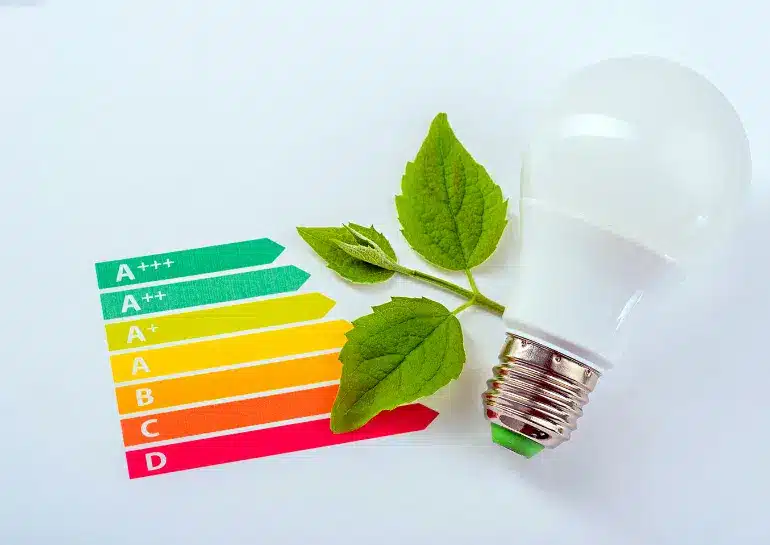
If consumers in Germany purchase a television from a foreign retailer, they should be able to use the product’s energy-efficiency requirements to determine what impact the television will have on energy consumption — just as they would in Germany or any other EU Member State. This transparency for consumers is also intended to be further enhanced in the future through a repairability score.
What Specifically Changes with the Ecodesign Regulation?
The scope is expanding considerably. Instead of covering only energy-related products, the regulation will in future cover almost all physical goods, including components and intermediate products — such as textiles, furniture, electronics and packaging. Exemptions include, among other things, food and feed, medicinal products and veterinary medicinal products, living plants and animals, and certain vehicles.
At the same time, the number of parties subject to the requirements is expanding. In addition to manufacturers, importers and distributors, authorised representatives, fulfilment service providers and other economic operators will also have to comply with stricter requirements. The obligations of online marketplaces and search engines to carry out checks will also be strengthened.
Two changes are likely to be particularly significant in practice:
- Digital Product Passport (DPP): A product-specific data set containing information on material composition, carbon footprint, and repair and recycling information. It is intended to create greater transparency for consumers, authorities and recyclers.
- Ban on the destruction of unsold goods: Companies will have to disclose what happens to unsold products. From July 2026, the destruction of certain unsold textiles and footwear will in principle also be prohibited, although small and medium-sized enterprises are temporarily exempt.
Public procurement procedures are also expected to increasingly give preference to more sustainable products.
Requirements for Manufacturers, Distributors, Importers and Exporters at National Level
Foreign companies offering their goods on the German market must comply with the EBPG/EVPG. Conversely, German companies selling products in another EU Member State must comply with that country’s applicable national ecodesign legislation. Compliance is made more complex by the fact that each Member State may introduce stricter requirements than those provided for by the EU Ecodesign Directive. For manufacturers and parties placing products on the market, knowledge of the EU directive alone is therefore not sufficient.
If you are unsure whether all relevant legal requirements are being met, you can have this clarified as part of a compliance check. We can support you with this and help you comply with the applicable legislation, including the Ecodesign Directive.
What Does the EU Ecodesign Directive Look Like in Practice?
To provide a concrete impression of the implications of the EU Ecodesign Directive for manufacturers, distributors, importers and exporters, practical examples are the best way to illustrate the requirements. We have summarised some examples below:
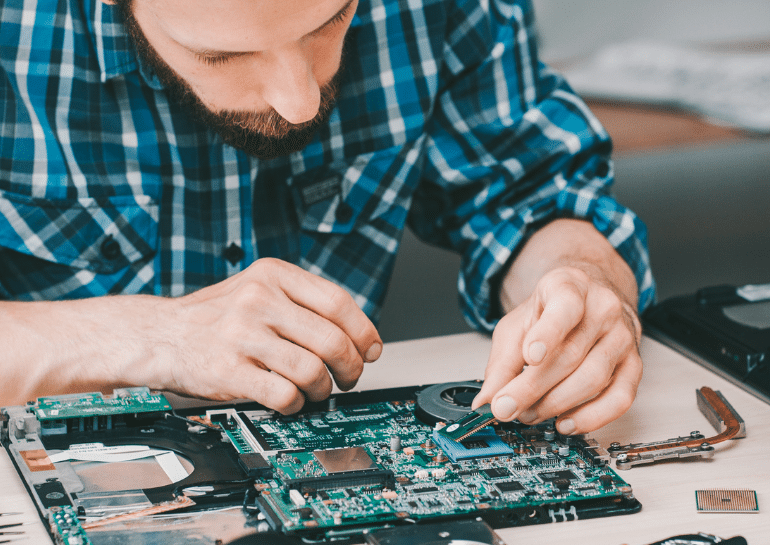
- Household appliances such as refrigerators, washing machines and dishwashers: A good energy-efficiency rating is no longer sufficient. Manufacturers must also improve the repairability of their products. In practical terms, this means keeping spare parts available for specified periods and making repair instructions accessible to professional repairers.
- Televisions, computers and office equipment in standby mode: Regulation (EU) 2023/826 limits the amount of electricity these devices may consume when switched off or in standby mode, replacing the earlier requirements from 2008/2009. The first set-top-box requirements already demonstrated how strict such limits can be, with a standby consumption limit of just 1 watt for devices without a display.
- Electric motors and variable-speed drives: Regulation (EU) 2019/1781 establishes minimum efficiency requirements for industrial drives. As a result, inefficient motors are gradually being phased out of the market.
- External power supplies, chargers and cables: Regulation (EU) 2025/2052 now also covers wireless chargers and USB Type-C cables, rather than only conventional external power supplies. It replaced the original 2019 regulation and significantly expanded its scope.
- Local space heaters: Under Regulation (EU) 2024/1103, new ecodesign requirements have applied to fan heaters, infrared heaters and storage heaters. These requirements replace the previous provisions dating from 2015.
Despite the different requirements applicable to specific product groups, there are also uniform provisions under the Ecodesign Directive 2009/125/EC that apply across product categories. For example, documentation of resource consumption – including life-cycle assessment – must be carried out for all energy-related products.
What Is the Timeline for the EU Ecodesign Directive Going Forward?
The Ecodesign Regulation is designed as a framework regulation. It does not itself establish specific product requirements; instead, the European Commission introduces these requirements progressively through delegated acts covering individual product groups. The product groups to be regulated first are determined by the Commission in a working plan. Textiles and steel have already been prioritised. The first binding product-specific requirements are expected for 2026/2027.
Until then, existing ecodesign measures adopted under the previous directive — for example, those covering refrigerators, televisions and light sources — will remain in force until they are replaced by new requirements under the ESPR.
If you are currently a manufacturer or party placing energy-related products on the market and are complying with the requirements of the Ecodesign Directive, you should prepare for broader and potentially modified ecodesign requirements for your products in the near future. We are, of course, happy to provide individual advice through our Consulting & Legal Services and keep you informed through our blog.
Take Action on the Ecodesign Directive Now!
The wide range of product-specific requirements under the Ecodesign Directive, combined with the different laws applicable in individual EU Member States, makes it a challenging task for manufacturers and other parties placing products on the EU market to ensure that their products are designed in compliance with the law.
As specialists in environmental compliance, Deutsche Recycling GmbH has an overview of the applicable requirements and offers a full-service solution. Our services range from compliance checks for your products and advice on complying with legislation to implementing measures designed to establish and maintain your environmental compliance.
We can also advise you on directives, regulations and laws beyond the Ecodesign Directive. Our services include advice on the German Packaging Act and comprehensive battery recycling services. Contact us to obtain initial, non-binding information.
FAQ: Ecodesign Directive
Which products does the EU Ecodesign Regulation apply to?
The EU Ecodesign Regulation will apply to almost all physical products, including textiles, furniture, electronics, packaging and many other product groups. Exemptions include, among other things, food, medicinal products, living plants and animals, and certain vehicles. The specific requirements will be introduced gradually for individual product groups. This significantly expands the scope compared with the previous legislation.
Who must comply with the requirements of the Ecodesign Directive?
The Ecodesign Directive applies to manufacturers, importers, distributors and parties placing products on the market. Under the new EU Ecodesign Regulation, authorised representatives, fulfilment service providers and, in some cases, operators of online marketplaces will also be subject to the requirements. All economic operators involved must ensure that the applicable legal requirements are met. Violations may result in significant legal consequences.
What new requirements does the EU Ecodesign Regulation introduce?
The EU Ecodesign Regulation introduces numerous new requirements. These include the Digital Product Passport, stricter requirements concerning repairability, and greater transparency regarding a product’s material composition and carbon footprint. Companies will also have to disclose what happens to unsold goods, and the destruction of certain product groups will in some cases be prohibited. The overall aim is to strengthen the circular economy throughout Europe.
What role does the Digital Product Passport play in the Ecodesign Regulation?
The Digital Product Passport is one of the most important innovations introduced by the Ecodesign Regulation. It contains information about a product’s material composition, repairability, recyclability and carbon footprint. This provides consumers, authorities and recycling companies with significantly greater transparency. At the same time, the product passport is intended to facilitate the development of an effective circular economy.
When will the new requirements of the EU Ecodesign Directive and Ecodesign Regulation apply?
The EU Ecodesign Regulation has already been in force as the new legal framework since July 2024. However, the specific requirements for individual product groups are being introduced gradually through delegated acts. The first binding requirements are expected to apply from 2026/2027 onwards. Until then, the existing requirements under the previous Ecodesign Directive will remain in force.