
[This article has been updated]
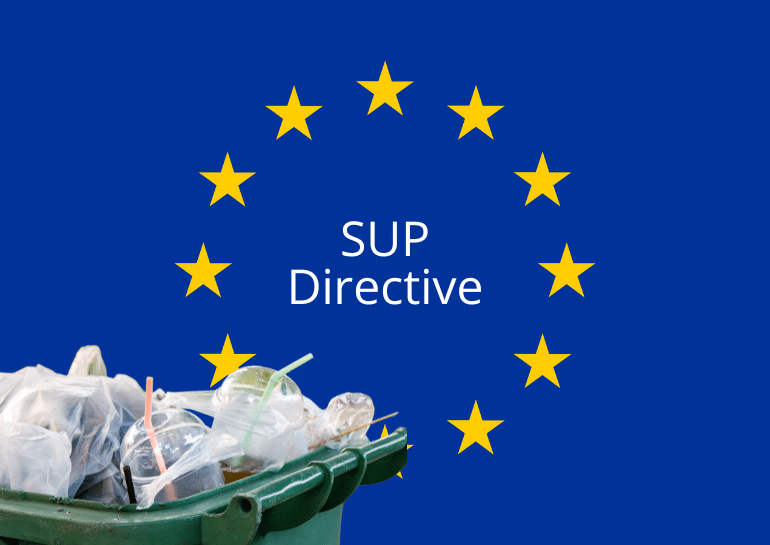
The environmental impact of plastic waste presents major challenges for businesses and society. The Single-Use Plastics Directive (SUPD), adopted by the European Commission in February 2026, is designed to address this issue in a targeted manner.
The Directive aims to reduce the use of single-use plastics and promote the transition to more sustainable materials. For manufacturers, importers, and distributors placing PET bottles and other beverage packaging on the market, it is crucial to understand the implications and obligations arising from the Directive. In this article, you will learn which steps are necessary to ensure compliance.
The EU Single-Use Plastics Directive at a Glance
The EU Single-Use Plastics Directive (SUPD) aims to reduce the environmental impact of plastic waste. Single-use plastic cutlery, plates, and cups are banned. Businesses, manufacturers, and importers must comply with Extended Producer Responsibility (EPR) requirements, cover waste management costs, and label products accordingly. Implementation has so far varied between countries, with France in particular introducing particularly stringent measures. This is now set to change. For the time being, the new rules will apply only to recycled materials produced in Europe until November 21, 2027 – after this deadline, however, they are also intended to cover materials from outside the EU. As an EPR service provider, we help you register your products in compliance with legal requirements and identify sustainable alternatives.
The Single-Use Plastics Directive is part of the EU’s strategy for a circular economy and aims to reduce the environmental impact of plastic waste, particularly in seas and oceans. Since 2019, the SUP Directive has banned a wide range of single-use plastic products and introduced new obligations for manufacturers.
For businesses, this means additional requirements under Extended Producer Responsibility (EPR). The Single-Use Plastics Directive particularly affects products for which sustainable alternatives already exist and whose improper disposal has particularly severe environmental consequences. This means that businesses must prepare comprehensively for these new requirements.
Which Products Are Covered by the Single-Use Plastics Directive?
The SUP Directive bans a range of single-use plastic products and introduces strict regulations for others. Here is an overview of the affected product categories:
Banned are:
- Single-use plastic cutlery, plates, and straws
- Plastic stirrers and cotton buds
- Food containers and beverage cups made of expanded polystyrene (EPS)
Strictly regulated:
- Products such as plastic bags, wet wipes, and balloon sticks
- Tobacco products with plastic filters are subject to new labeling and reporting requirements
- Single-use PET beverage bottles containing recycled content
For your business, it is crucial to assess at an early stage which products are covered by the Single-Use Plastics Directive and whether you need to replace them with sustainable alternatives or implement the required labeling measures. In particular, the new recycled-content requirements for PET products such as bottles and other composite beverage packaging will create additional administrative challenges as part of the Single-Use Plastics Directive.
Accurate data collection and reporting help ensure compliance and streamlined processes.
Extended Producer Responsibility (EPR) and the SUP Directive: Your Obligations as a Manufacturer
A key component of the SUP Directive is Extended Producer Responsibility (EPR). Businesses that place single-use plastics on the market must not only finance the disposal and recycling of these products, but also inform consumers about proper disposal.
For affected businesses, this means:
- Covering waste management and cleanup costs: Businesses are required to contribute to the costs of waste management, plastic waste cleanup, and information campaigns
- Consumer information and labeling: Under the Single-Use Plastics Directive, certain products must be clearly and visibly labeled in the EU to inform consumers about proper disposal and the environmental impact of improper disposal.
It is essential for businesses to comply with the new requirements of the Single-Use Plastics Directive in order to avoid penalties. Important deadlines, such as November 21, 2027, should also be closely monitored to prevent unnecessary complications. We will keep you up to date on our blog!
The Single-Use Plastics Fund and Its Future
Since 2024, the Single-Use Plastics Fund Act (EWKFondsG) has been in force, introducing new responsibilities for manufacturers of single-use plastic products such as takeaway packaging, tobacco filters, and wet wipes:
- They must contribute financially to the removal of environmental pollution in public spaces.
- The amount of the levy is based on the quantities of products placed on the market each year. These quantities must be reported via the DIVID platform of the German Environment Agency (UBA).
These rules were transitional in 2025:
- Extended reporting deadline: The deadline for submitting data for 2024 was extended to June 15, 2025.
- No mandatory auditor verification: As an exception, no external audit confirmation was required in 2025 – even for quantities exceeding 100 kg.
- Audit upon request: The UBA could nevertheless request an audit on a case-by-case basis.
- Levy obligation remained in force: The obligation to report and pay the levy applied even without registration.
Changes for 2026 and 2027
The EU Single-Use Plastics Directive is entering a new phase in 2026 and 2027. The key developments at a glance:
- Consumption reduction (2026): By 2026, all EU Member States must demonstrate a measurable reduction in the consumption of single-use plastic products compared with 2022. The Directive does not specify concrete targets, however; Member States are free to define their own approach and targets.
- Interaction with the new Packaging and Packaging Waste Regulation (PPWR): The new EU Packaging and Packaging Waste Regulation (PPWR), which applies from August 2026, will also trigger changes to the Single-Use Plastics Directive – for example, regarding labeling and producer responsibility.
- Evaluation of the Directive (2027): By July 3, 2027, the European Commission will carry out a comprehensive evaluation of the Directive and report its findings to the European Parliament and the Council. The aim is to assess the effectiveness of the measures implemented to date and make adjustments where necessary.
The years 2026/2027 therefore mark an important new phase for the Single-Use Plastics Directive. The focus is shifting from implementation to evaluation and further adjustment.
How Is the Single-Use Plastics Directive Implemented in Other EU Countries?
Implementation of the Single-Use Plastics Directive currently varies across the EU, but this is expected to evolve into a more harmonized process over the coming years to facilitate data collection and evaluation.
Each country currently sets its own priorities and requirements for implementing the Directive. Below is an overview of implementation in four selected countries:
The Single-Use Plastics Directive in France:
France is one of Europe’s leaders in the fight against plastic pollution and has introduced some of the continent’s strictest measures. Since 2021, most single-use plastic products have been banned.
- For 2025, France set a target of recycling at least 77% of all plastic beverage bottles – this rate is to increase to 90% by 2029.
- From 2040, France plans to introduce a complete ban on single-use plastics.
In addition, products containing plastic, such as wet wipes and cigarette filters, are subject to labeling requirements to inform consumers about proper disposal and the environmental impact.
The Single-Use Plastics Directive in Germany:
In Germany, the SUP Directive was transposed into national law through the Single-Use Plastics Fund Act (EWKFondsG), which entered into force in May 2023. The Single-Use Plastics Fund, administered by the German Environment Agency, is used to finance environmental protection measures.
In 2024, the levy obligation came into force for all affected manufacturers, regardless of whether they are registered. Levy payments are processed via the digital DIVID platform. For more information on implementation in Germany, see our blog article “Single-Use Plastics Fund Act: New Levy for Manufacturers.”
International manufacturers and distributors were also required to appoint an authorized representative in 2024. Further information and our services are available on our page about EWKFondsG authorized representation.
The Single-Use Plastics Directive in the Netherlands:
Since July 2023, customers have been required to pay an additional charge for single-use plastic takeaway products. As of January 2024, certain single-use plastic products were no longer available in Dutch stores. The ban also covered the use of microplastics in cosmetic products, with the aim of improving water quality and protecting the marine environment.
The Single-Use Plastics Directive in Spain:
A key element of Spain’s implementation is a plastic tax on non-reusable plastic packaging, which came into force in January 2023. The tax amounts to €0.45 per kilogram of non-reusable plastic and applies to manufacturers and importers, with the aim of promoting the use of recycled materials and alternative packaging.
Spain has also introduced bans on certain single-use plastic products, such as plastic cutlery, straws, and containers made of expanded polystyrene, to support the objectives of the EU Directive. Another important aspect is Extended Producer Responsibility (EPR), which ensures that manufacturers bear the costs of collecting and recycling plastic waste in order to minimize its environmental impact.
These are, of course, just a few examples. Italy, Belgium, Greece, Sweden, and Portugal have also introduced various measures. Each EU country is required to implement the Single-Use Plastics Directive through its own national legislation and enforcement mechanisms, which vary in terms of their strictness and approach.
With the clarification of the Single-Use Plastics Directive in February 2026, recycled PET content must now also be subject to stricter verification and reporting requirements. Structured data collection workflows are particularly valuable here, especially across national borders!
How Does the SUP Directive Affect Your Business?
For businesses that manufacture, import, or distribute single-use plastic products such as single-use PET beverage bottles and many others, the SUPD brings significant changes.
Affected businesses must ensure that they
- identify affected products and assess sustainable alternatives,
- meet EPR requirements, such as covering disposal and recycling costs, and
- properly implement labeling requirements and consumer information obligations.
For businesses, compliance with the Single-Use Plastics Directive is not only a legal obligation but also an opportunity to gain a competitive advantage by adopting sustainable alternatives.
Practical Steps for Implementing the Single-Use Plastics Directive
As a full-service EPR provider, we recommend that businesses take the following steps to meet the requirements of the SUP Directive as effectively as possible:
- Product review: Analyze your product portfolio and identify all affected single-use plastic products.
- Sustainable alternatives: Assess whether you can switch to more sustainable materials.
- Registration and reporting: Ensure that your products are correctly registered and reported to the relevant authorities.
- Consumer information: Inform your end customers about proper disposal methods and the environmental impact of improper disposal.
Why Is Professional Advice Important for SUPD Compliance?
The Single-Use Plastics Directive and EPR requirements are complex and vary from country to country. Professional advice can help you ensure environmental compliance efficiently and avoid potential penalties. As a full-service provider for Extended Producer Responsibility, we offer tailored solutions to support you in meeting all legal requirements. Our services include:
- Advice and support with product registration
- Handling reporting obligations and waste management
- Customized solutions for consumer information and product labeling
Conclusion: Turning the Single-Use Plastics Directive into an Opportunity
The EU Single-Use Plastics Directive presents new challenges for businesses, but it also offers an opportunity to gain a competitive advantage through sustainable innovation. By acting early and implementing the requirements of the SUP Directive, you can not only avoid legal sanctions but also make a positive contribution to environmental protection.
Take this opportunity to consult with us, Deutsche Recycling GmbH, about the Single-Use Plastics Directive. Together, we can find solutions to make your business fit for the future.
FAQ: Single-Use Plastics Directive
Which products are banned under the EU Single-Use Plastics Directive?
The EU Single-Use Plastics Directive bans a range of products, including single-use plastic cutlery, plates, and straws, stirrers, cotton buds, and food containers made of expanded polystyrene (EPS). It also imposes strict regulations on products such as plastic bags, wet wipes, and tobacco products with plastic filters. Businesses should review their product portfolios at an early stage to avoid violations and potential fines.
What does the Single-Use Plastics Directive mean for manufacturers and importers?
The SUP Directive requires manufacturers and importers to assume what is known as Extended Producer Responsibility (EPR). This means they must contribute to the costs of waste management, cleanup, and consumer information. Certain products are also subject to labeling requirements informing consumers about proper disposal.
How is the SUP Directive implemented in Germany?
In Germany, the SUP Directive was transposed into national law through the Single-Use Plastics Fund Act (EWKFondsG), which entered into force in May 2023. Since 2024, all affected manufacturers have been subject to a levy obligation, regardless of whether they are registered. Levy payments are processed via the German Environment Agency’s digital DIVID platform.
What is the Single-Use Plastics Fund and who does it apply to?
The Single-Use Plastics Fund is administered by the German Environment Agency (UBA) and requires manufacturers of certain single-use plastic products to make payments into the fund. Those affected include manufacturers of takeaway packaging, tobacco filters, and wet wipes. The amount of the levy is based on the quantities of products placed on the market each year, which are reported via the DIVID platform.
How can businesses comply with the requirements of the Single-Use Plastics Directive?
To comply with the requirements of the Single-Use Plastics Directive, businesses should first review their product portfolios for affected single-use plastics and assess sustainable alternatives. They must then ensure that EPR registrations and reporting obligations are fulfilled correctly and that labeling requirements are implemented. Professional advice from an EPR service provider can help businesses keep track of country-specific requirements.