

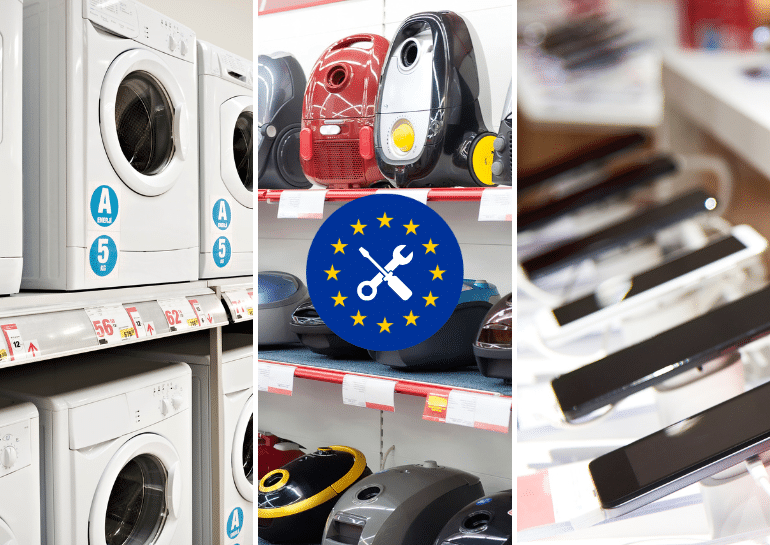
The Right to Repair regulatory framework is officially active across the European Union and Germany. International enterprises manufacturing, exporting, or distributing electronics and technical equipment into the EU market must adapt to drastic regulatory changes immediately. This legislation goes far beyond basic consumer protection by establishing mandatory compliance prerequisites for maintaining European market access. Failing to set up a compliant technical support infrastructure introduces severe commercial vulnerabilities. Non-EU OEMs and global suppliers risk losing their European distribution networks, facing expensive legal warning letters, and triggering immediate import bans or product recalls by EU market surveillance authorities.
The EU Right to Repair Directive at a Glance
The regulatory framework known as the Right to Repair is a comprehensive package of new statutory rules designed to enforce the circular economy and reduce electronic waste. The legal foundation rests on EU Directive (EU) 2024/1799, which is now fully integrated into national legislations like the German Civil Code. The directive targets specific product groups that are prone to early obsolescence, shifting the entire industry focus from product replacement to lifecycle extension. By giving European consumers a legally enforceable right to claim repairs even after the standard commercial warranty expires, the European Union is forcing a complete overhaul of global product design, spare parts logistics, and international B2B supply agreements.
Sourcing from Outside the EU: New Contractual Risks for Distributors
The new EU Right to Repair directive leaves no room for loopholes regarding third-country imports. If a manufacturer is established outside the European Union, the legal obligation to provide spare parts and perform repairs automatically shifts down a strict statutory cascade to their EU Authorized Representative, the importer of record, or the final distributor.
For international companies operating from outside Europe, this cascade mechanism creates immediate operational and financial risks. European importers and wholesalers now carry the full legal liability for non-compliant imported goods. As a result, European distribution networks are already conditioning new contracts on a guaranteed supply of original spare parts and technical diagnostics. Under German sales law, repairability has become an official statutory product characteristic for commercial transactions. European procurement departments are actively rewriting their global sourcing contracts to push the entire financial and logistical burden of the repair mandate directly back to non-EU factories.
Core Regulatory Mandates for EU Market Placement
To protect market share in Germany and the wider European Economic Area, international manufacturers must quickly align their product engineering and reverse logistics with strict new rules. The official scope of application covers major export categories including smartphones, tablets, electronic displays, servers, vacuum cleaners, washing machines, dishwashers, and welding equipment.
Global manufacturers are legally forced to guarantee the availability of original spare parts and specialized diagnostic tools for a period of seven to ten years depending on the specific product category. This critical timeframe starts on the exact day that the final unit of a specific model is placed on the EU market, meaning the obligation lasts long after active manufacturing and assembly have stopped. Furthermore, engineering blocks designed to prevent independent repairs, such as software-based parts pairing, component serialization, or restricting diagnostic access for independent service providers, are now completely illegal within the EU. Non-compliance is prosecuted as an unfair commercial practice under competition law. Additionally, comprehensive repair manuals, technical schematics, and realistic reference prices for standard repair operations must be published on a freely accessible website.
Critical Enforcement Timelines: B2B Conformity and Labeling Mandates
For B2C e-commerce and retail transactions, distributors must display new, standardized EU labels detailing statutory guarantee rights and commercial warranties. Non-EU manufacturers must provide this underlying product metadata to their European online retail channels on time to prevent automated product listing suspensions on major e-commerce platforms.
While consumer-facing rules are already active, the strict B2B statutory conformity requirements take full effect for all supply contracts signed on or after January 1, 2028. Long-term procurement contracts currently under negotiation must immediately include these milestones to shield European buyers from severe liability risks.
Strategic Supply Chain Protection for International Operators
Achieving compliance under the Right to Repair framework requires smart cross-border logistics and proactive legal planning. For international OEMs and exporters outside the European Union, a structured compliance methodology is essential for business continuity.
First, companies lacking a physical facility within the European Union should appoint an official EU Authorized Representative to manage the legal repair cascade and handle communications with European market surveillance authorities. Second, global supply chains must be optimized to handle the long-term distribution of individual component parts to European repair networks over a ten-year horizon. Finally, enterprises must conduct an integrated regulatory audit. The Right to Repair framework does not exist in isolation; it works in tandem with the Ecodesign for Sustainable Products Regulation, the upcoming Digital Product Passport, the EU Battery Regulation, and WEEE directives, meaning that isolated compliance strategies will fail.
Do not jeopardize your commercial access to the world’s largest integrated trade zone. At Deutsche Recycling GmbH, we specialize in navigating the complex regulatory architecture of European environmental and product compliance. We provide comprehensive international advisory services and act as your operational partner to ensure full supply chain conformity.
Secure your European market access – engage our international compliance experts today.
FAQ: The EU Right to Repair
Which specific entities are held legally responsible if an international manufacturer has no physical presence within the European Union?
If a manufacturer operates entirely outside the European Union, the legal obligations under the directive follow a strict statutory cascade. Responsibility falls initially upon the manufacturer’s designated EU Authorized Representative. If no such representative has been appointed, the legal mandate transfers automatically to the importer who brought the goods into the European Economic Area. Should the importer not be reachable or identifiable, the obligation ultimately rests upon the final distributor or retailer selling the product to the end user.
Does the directive permit manufacturers to charge for the execution of post-warranty repairs?
Yes, the regulation explicitly allows manufacturers to charge a reasonable fee for repairs requested outside the statutory warranty period. This fee may encompass the cost of labor, original spare parts, and cross-border transport. Furthermore, the framework permits the inclusion of a customary profit margin. A repair may only be refused if it is factually or legally impossible to execute, meaning that high operational effort alone does not constitute a valid reason for refusal.
How is the mandatory timeframe for spare parts availability calculated under EU law?
The timeframe for the availability of components, which ranges between seven and ten years depending on the specific product category, does not begin at the start of production or when a specific unit is sold. Instead, the statutory duration is calculated from the exact date that the very last unit of that specific product model is officially placed on the European market. Consequently, the operational obligation to store and supply components can extend significantly beyond the date active manufacturing ceased.
What are the consequences for manufacturers utilizing software locks or components pairing to restrict independent repairs?
The directive establishes a comprehensive ban on all hardware and software techniques that deliberately hinder maintenance by independent workshops or the use of compatible second-hand parts. Practices such as digital serialization or software-driven parts pairing are classified as anti-circumvention measures. In Europe, these practices are treated as unfair commercial acts under competition law, allowing competitors and trade associations to initiate swift legal actions, demand sales injunctions, and seek financial damages.
How does the Right to Repair directive impact current international B2B procurement contracts?
While the directive focuses heavily on consumer rights, it fundamentally alters the legal framework for B2B commercial transactions. Under national laws such as the German Civil Code, technical repairability becomes an inherent element of standard product conformity for all contracts signed from January 1, 2028. European buyers are therefore compelled to include robust indemnity clauses in their international supply agreements today to ensure that non-EU suppliers legally absorb all long-term spare parts risks, storage costs, and technical documentation liabilities.